



Ropery Walk Online Safety for school website
Our increasingly reliant upon digital world is constantly changing and sometimes in ways you might have never heard about or understand. It is becoming increasingly difficult hard to know or feel that you are doing enough to keep not only your children, but yourself and the ones you love safe online. Yet, online safety is not only about keeping children away from digital dangers. It is also about teaching them to become responsible, respectful and upstanding digital citizens who can recognise, react and report troubling online behaviour but also have fun and use the digital world as a tool to expand their knowledge and understanding of the world around them.
More children than ever are consuming digital content. Ofcom’s 2025 “Children and Parents: Media Use and Attitudes Report” found:
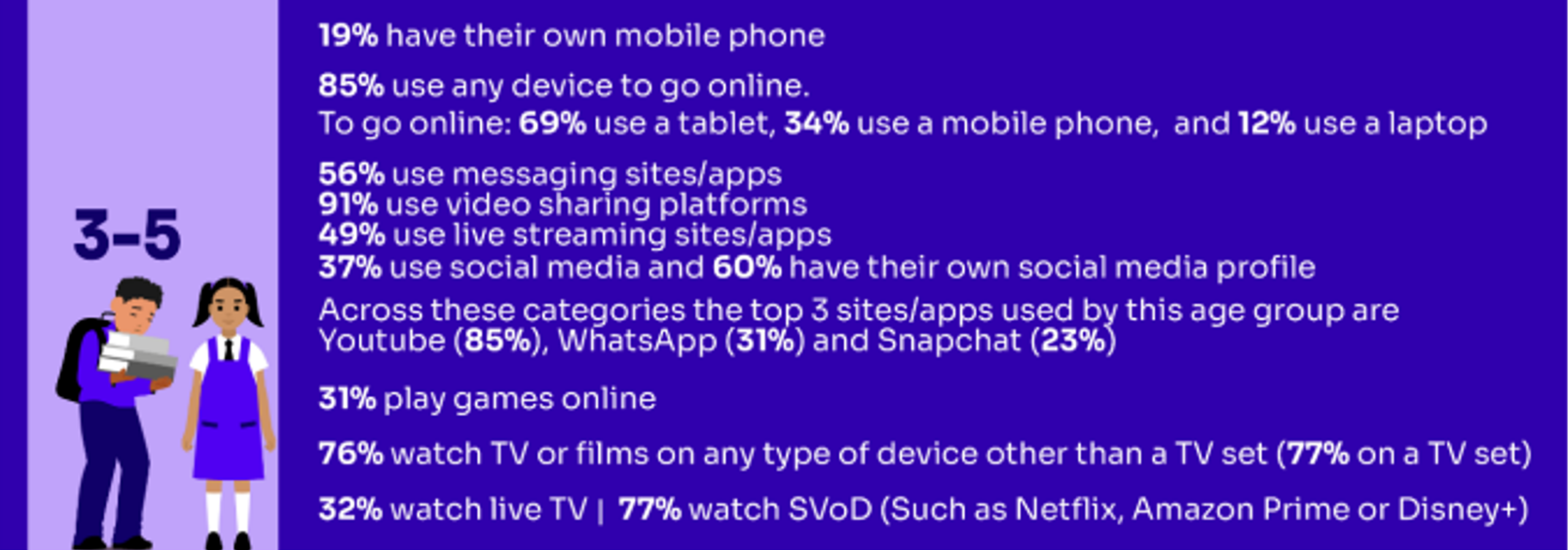
- There has been an increase in 3-5-year-olds using social media platforms
- More children are watching livestreamed videos, a growing trend over the past three years
- Of the 8 in 10 (79%) of 3-17s who have their own profile on a social media, messaging, VSP or livestreaming site, 16% include a photo of themselves which anyone can see
- Sixteen per cent of 3-17s livestream their own videos
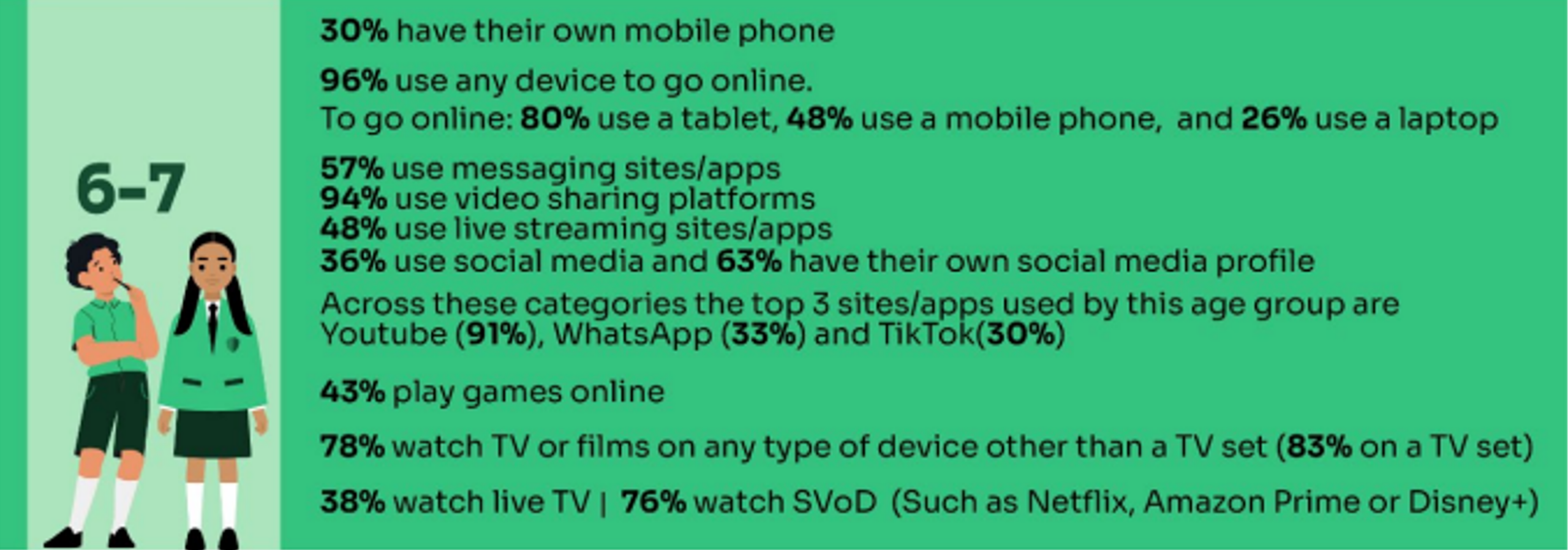
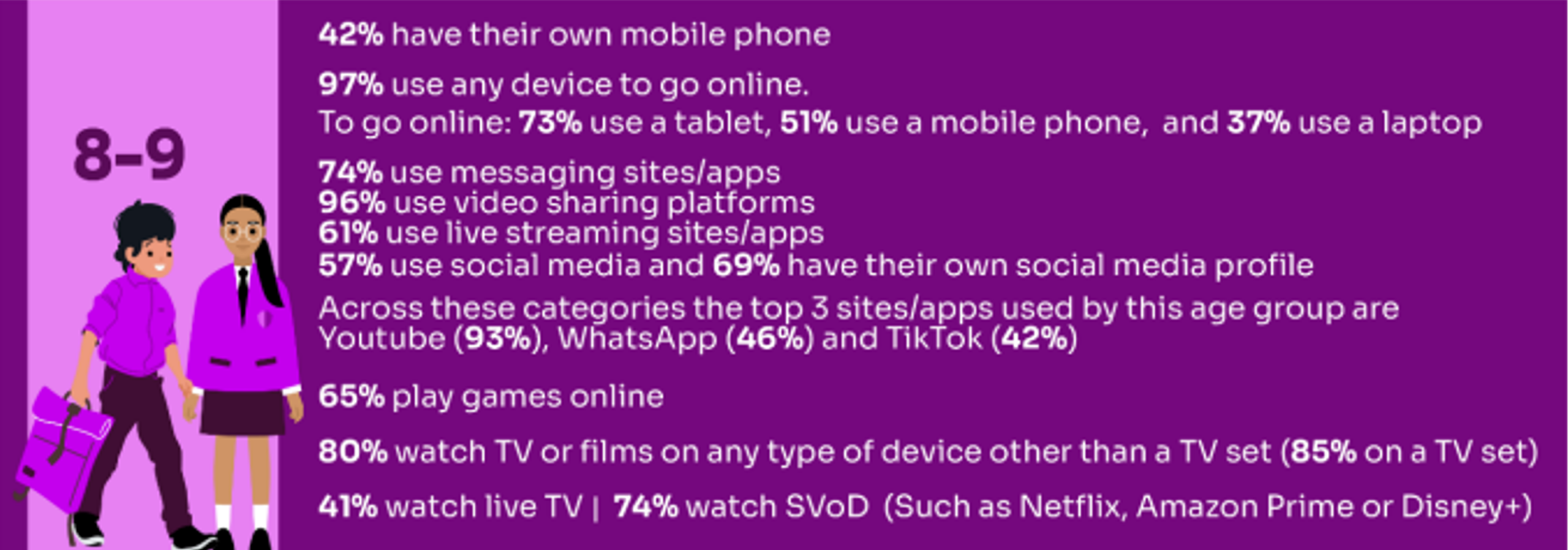
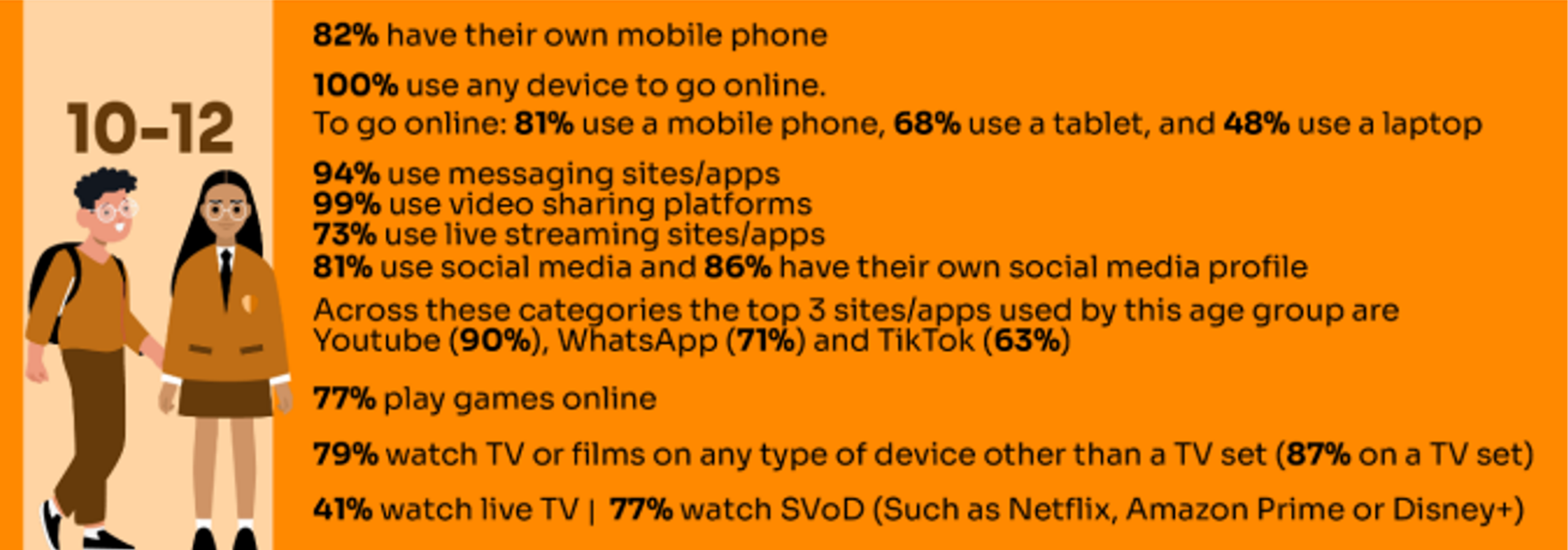
The report also produced statistics around children of differing ages use of online technology:
Parents can take simple steps to help feel more protected online. These can include but are not limited to:
- Use of parental controls on children’s devices such as mobile phones, tablets, laptops, gaming consoles.
- Limiting screen time or time limits on certain apps.
- Only allowing children to access age-appropriate sites or content such as YouTube Kids.
- Only allowing children online while they are present in the room.
- Turning off Wifi access to devices after certain times to avoid children having online access without supervision.
However, there are lots of supportive and informative resources out there to support parents:
- ThinkUKnow is a great website ran as part of the education branch of the National Crime Agency. They have a wide range of resources for children from 4-18 as well as information and advice for parents.
- Internet Matters, in partnership with BT, have lots of helpful and engaging content to help parents and children feel safer in the digital world including tips on how to setup a device for a child, choosing age-appropriate apps and how to tackle online issues when they arise.
- ChildNet are a not-for-profit charity who specialise in online safety and digital wellbeing, and they help make sure Safer Internet Day is never forgotten!
Unfortunately, online bullying is becoming increasingly common and impactful to young people’s lives in forms such as trolling, hate comments and spamming. It is vital that children have a safe, secure and respectful environment where they can share what has been happening and know that they will be listened to, both at home and at school. As well as this, most apps and or games have ways to report online bullying so be sure to know how to do this for the digital content platforms and websites your children access.
What we do at Ropery Walk
Ofsted describes e-safety as a school’s ability to protect and educate pupils in their use of technology as well as having appropriate mechanisms in place to intervene and support any incident where appropriate.
At Ropery Walk, we protect our students but also give them the tools to thrive in the digital world.
Firstly, we protect our students by protecting them from accessing inappropriate content in school through our extensive filtering and monitoring systems, which are routinely checked to ensure their effectiveness.
Secondly, we provide a substantial education through our adapted Common Sense Media Digital Citizenship curriculum taught every half-term in 6 key strands linked to our RICHES school values:
- Relationships and Communication (Respect) – “We know the power of our words and actions.”
- Digital Footprint and Identity (Inclusion) – We define who we are
- Cyber-bullying, Digital Drama and Hate Speech (Courage) – We are kind and courageous.”
- Media Balance and Well-Being (Honesty) – We will find balance in our digital lives.
- News and Media Literacy (Empathy) – We are critical thinkers and creators.”
- Privacy and Security (Safety) – We care about everyone’s privacy.”
As well as this, e-safety lessons are embedded into our PSHE curriculum and every year, as a school, we celebrate Safer Internet Day led by our KS2 Digital Leaders.
Thirdly, we provide our staff with up-to-date annual training regarding online safety.
Furthermore, we have a zero-tolerance policy towards online bullying. Even if an incident has occurred outside of school, when there is an impact being felt in the classroom, the incident will be dealt with inline with our school behaviour policies and children’s parents/guardians will be informed where necessary.
Finally, we regularly post on our ClassDojo school story with helpful tips and advice when tackling today’s digital world – offering educational information to parents and carers.
If you have concerns
There are lots of great places to seek help and advice if something online is troubling you or anyone in your family. The link below is especially useful because it links directly to the CEOP (Child Exploitation and Online Protection.
